

Posted on april 8, 2026
Rethinking Food Through Haptics
On April 7, members of Foodtech Innovation Network gathered in Lund for a hands-on workshop exploring how sensory experiences shape our relationship with food.
Led by Corina Akner, founder and CEO of VÄRT – Sustainable Food Lab, the session focused on haptics: how texture, temperature, form, and mouthfeel influence not only how we experience food, but whether we accept it at all.
Through interactive exercises and product testing, participants explored how deeply ingrained habits and expectations affect our willingness to embrace new, more sustainable ingredients.
Haptics, therefore, becomes a powerful tool in accelerating the transition to a more sustainable food system.
Challenging Norms and Expectations
The workshop highlighted how food choices are shaped by cultural norms and perceptions of status.
Ingredients like meat still carry strong status, while others, such as dried fruits, have recently been repositioned and gained new appeal. Shifts like these show that preferences are not fixed, but designed and influenced over time.
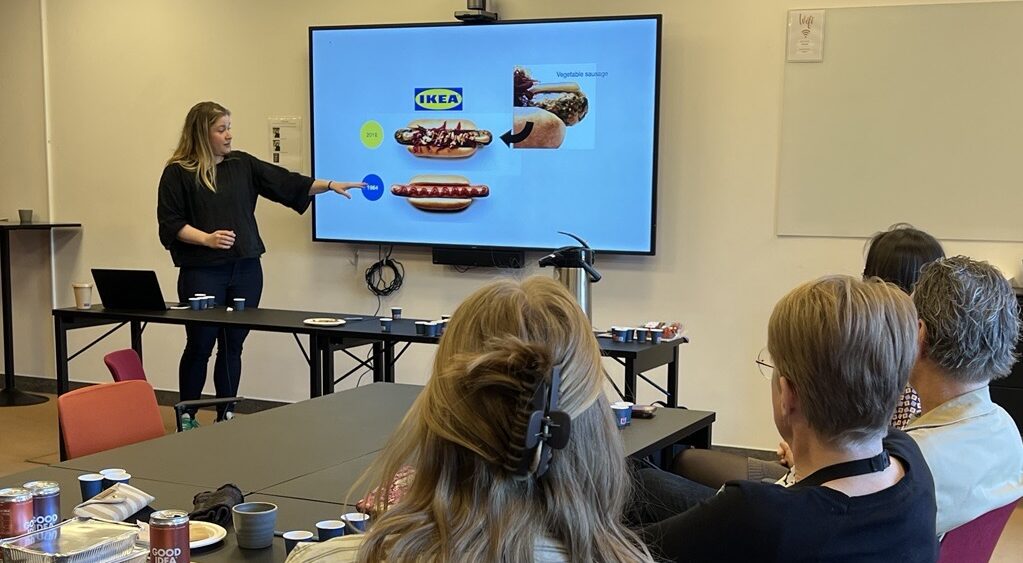
A key insight was that innovation becomes easier when new products fit into familiar formats. Replacing meat with a similar alternative in a well-known dish can be more effective than introducing entirely new concepts that feel unfamiliar on the plate.
To illustrate this, participants explored how different ingredients and products can be mapped based on complexity and cultural fit, from familiar staples like yellow peas to more challenging options in a Swedish context like tempeh or mussel mince.
From Insight to Application
The session also included product testing brought in by community members. We tried legume-based baby food, bake-off cookies designed to reduce food waste, and fermented rosehip creams developed as a functional food targeting osteoarthritis were tested across variations in sweetness and texture.
These real-world examples grounded the discussion in practical application, showing how haptics can be used as a strategic tool in product development.
Whether working with new ingredients, reducing waste, or increasing perceived value, the ability to design for sensory experience can make the difference between resistance and acceptance.