

Posted on November 2, 2026
Open Table Insights: Regenerative Business Models in a Regenerative Food System
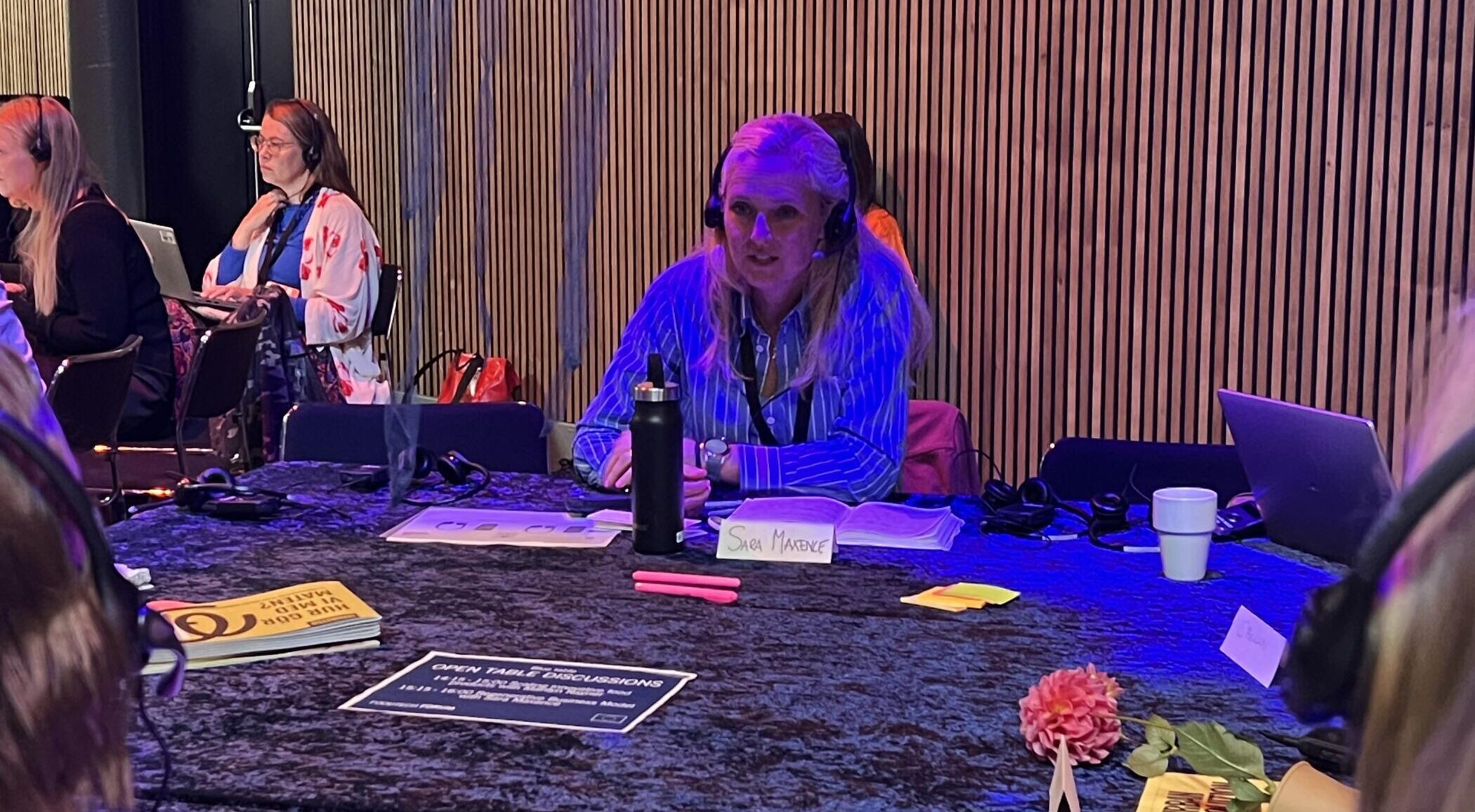
One conversation explored what regenerative thinking means when translated into actual business models, relationships and investments. Here are some of the key insights from the discussion, led by Sara Maxence, Regenerator.
Summary
The discussion explored what it means to build regenerative businesses and how regenerative principles can be translated from individual actions and farming practices into business models, relationships and responsibility across the food system.
A central theme was the tension between regenerative values and the structures of today’s economy. While sharing, reciprocity and community-building can feel natural in everyday life, applying the same principles in business is often more difficult. Entrepreneurs must navigate investor expectations, financial pressures and established business models that do not always reward long-term value creation.
The discussion highlighted the importance of rethinking relationships, starting with the communities closest to us and developing new tools and business models that enable companies to create value for people, the environment and the local economy – rather than simply extracting value.
From transactions to relationships and reciprocity
One of the key messages was to focus on relationships, not just price.
Participants shared examples of regenerative thinking in everyday life, including sharing surplus apples with neighbours, inviting people to pick fruit and bringing apples to events. Over time, this created a cycle of reciprocity, with people returning homemade apple sauce, jam and other products.
Other examples included exchanging services, sharing knowledge and creating opportunities for people to learn about one another’s interests.
These examples illustrated how trust, generosity and mutual benefit can strengthen relationships and create value beyond individual transactions.
The challenge is translating these principles into professional settings, where relationships are often shaped by competition, time constraints and financial incentives.
The challenge of building regenerative businesses
Several participants were trying to build businesses that contribute positively to their communities and the wider food system. However, they described difficulties in reconciling regenerative ambitions with conventional business expectations.
Key challenges included:
- Finding investors who understand and support regenerative business models.
- Building financially viable companies that give back rather than simply extract value.
- Finding the courage to pursue alternative approaches when the outcome is uncertain.
- Aligning commercial success with environmental and social responsibility.
- Moving beyond short-term financial considerations towards long-term value creation.
A recurring question was how businesses can be designed to regenerate the systems they depend on, rather than merely reducing their negative impact.
Participants also noted that regenerative practices can be easier to implement in personal life than in a business environment, where existing incentives and structures can make change difficult.
Community as a starting point for change
The discussion highlighted the importance of acting within one’s immediate community and recognising the influence individuals and organisations already have.
Examples included building local business networks, connecting people who can support one another, sourcing and selling locally, and using professional roles to influence others’ choices.
A locally rooted business can potentially create value beyond its own operations by strengthening relationships, supporting other businesses and keeping economic activity within the community.
Participants also discussed the importance of reciprocity in professional networks. Supporting other people’s events, sharing knowledge and contributing to collective initiatives can help create an environment where others are more willing to contribute in return.
The underlying principle was that regeneration begins with the relationships and systems we can directly influence.
Rethinking the tools and assumptions behind business
Another important theme was that many of the tools used to develop businesses are not necessarily designed to support regenerative outcomes.
Traditional business models often focus on customer needs, revenue, growth and competitive advantage. Participants questioned whether these frameworks adequately capture relationships, ecological health, shared value and long-term resilience.
The discussion suggested a need to rethink not only how businesses operate, but also how entrepreneurs understand the world and the opportunities available to them.
One idea was to shift the starting point from need towards possibility: rather than focusing exclusively on problems and unmet needs, entrepreneurs could explore what becomes possible when relationships, resources and capabilities are connected in new ways.
Participants also raised the possibility of developing a regenerative alternative to the Business Model Canvas. The discussion suggested that knowledge and ideas already exist, but need to be translated into accessible tools that entrepreneurs and organisations can apply in practice.
Bridging the gap between regenerative innovation and investment
Participants pointed to a disconnect between entrepreneurial ideas and existing investment structures.
Some regenerative business concepts struggle to gain support because they do not fit familiar investment models or conventional expectations of growth and returns. Investors may find it difficult to assess opportunities that require new ways of thinking about value creation.
This creates a challenge for entrepreneurs who want to build businesses that are both financially viable and regenerative.
The discussion raised an important question: how can investment models evolve to recognise the long-term value of businesses that strengthen ecosystems, communities and local economies?
It also highlighted the need to make regenerative business models easier to understand, communicate and evaluate, without losing the complexity of the systems they aim to improve.
Balancing environmental ambitions with commercial reality
Participants broadly shared the ambition of creating a healthier environment and a more regenerative food system. However, they also acknowledged that businesses need paying customers and viable revenue models to survive.
This tension highlights the importance of designing business models where environmental and social benefits are integrated into the core value proposition rather than treated as additional costs or optional activities.
Regenerative businesses need to demonstrate how their approach can create tangible value for customers, suppliers, communities and the environment while remaining commercially sustainable.
Uncertainty is part of this process. Participants recognised that building a different kind of business can be uncomfortable, particularly when the path forward is unclear. At the same time, this uncertainty can create space for experimentation and new possibilities.
Key takeaways
The discussion highlighted six priorities for advancing regenerative business models in the food system:
- Prioritise relationships and reciprocity: Build trust, collaboration and mutual value rather than focusing exclusively on price and individual transactions.
- Start with your immediate community: Use existing relationships and local networks to create tangible social, environmental and economic benefits.
- Rethink business success: Explore models that create value for people, the environment and the economy over the long term.
- Develop new tools and frameworks: Adapt conventional business development tools to better support regenerative principles.
- Connect regenerative ambition with financial viability: Develop business models that can attract customers and investment while contributing positively to the systems they depend on.
- Create the future rather than reproduce the present: Challenge established assumptions and develop the courage, tools and partnerships needed to make alternative business models possible.
Overall conclusion
The discussion highlighted that regenerative business is not only about changing production methods or reducing environmental harm. It also involves rethinking how businesses relate to people, communities, resources and the wider food system.
Moving towards a regenerative economy requires new business models, supportive investment structures and practical tools that help entrepreneurs translate their ambitions into viable businesses.
The central message was to begin with the relationships and opportunities within reach, build mutual value and develop the tools needed to turn regenerative thinking into everyday business practice.