
Posted on November 3, 2026
Open Table Insights: Can Europe Build the Next Food Giants?
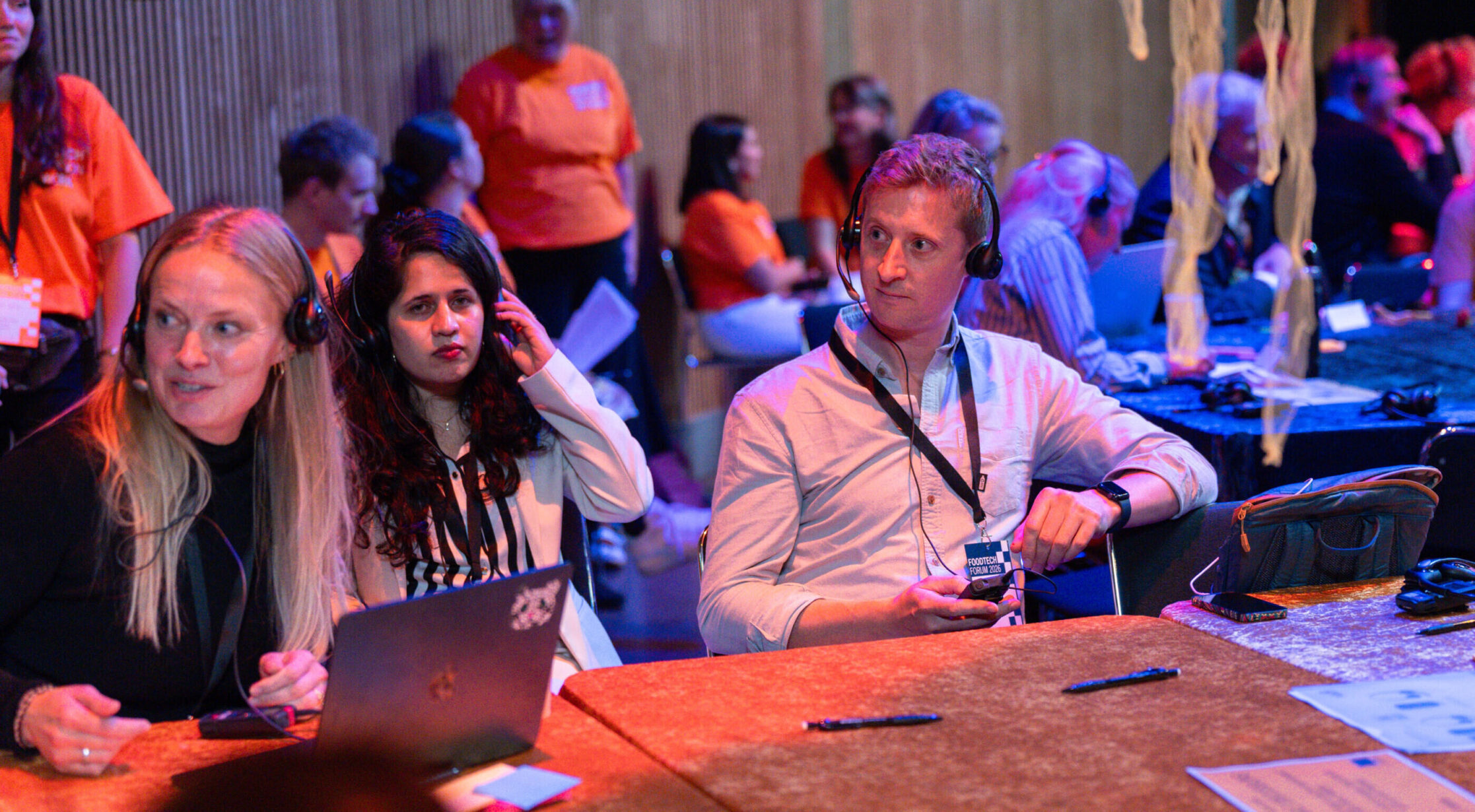
Some of the most valuable conversations at Foodtech Forum 2026 happened around the table. Through six Open Table Discussions, participants met in smaller groups to dig deeper into some of the questions shaping the future of food, from AI and circularity to scaling, investment and new business models. One of these conversations asked a big question: Can Europe build the next food giants? Here are some of the key insights from the discussion, led by Louise Rørbæk Heiberg, Partner at Nordic Foodtech VC.
Summary
The discussion explored Europe’s ability to turn its strong research and innovation ecosystem into globally competitive foodtech companies. A central theme was that Europe has many of the essential ingredients to lead the transformation of the global food system, but struggles to translate innovation into commercial success, industrial scale and international growth.
At the same time, participants questioned whether the next generation of food giants should resemble today’s global food corporations or whether Europe has an opportunity to build a new kind of company, with sustainability, circularity and strategic technology ownership at its core.
Europe needs to become better at scaling innovation
Europe has a strong position in food science, fermentation, biotechnology and other emerging technologies. It also benefits from highly skilled talent, strong research institutions and the ability to develop specialised technologies and innovative solutions.
However, Europe often struggles to turn these innovations into globally competitive businesses. Fragmented markets, slow decision-making, regulatory barriers and difficulties securing growth capital can make it harder for companies to move from research to commercial success.
The key challenge is therefore how Europe can create better conditions for companies to scale internationally and compete in global markets.
Geopolitical developments create a strategic window of opportunity
Changing geopolitical conditions are making food security, technology and intellectual property (IP) increasingly important from a strategic perspective.
Europe has an opportunity to strengthen its position in food security and strategic autonomy by retaining and developing technologies that are critical to future food production.
This raises an important question: how can European companies grow while maintaining long-term ownership of their technologies, rather than selling their innovations too early to external actors?
Building successful companies requires more than a great idea
A promising technology or unique innovation is not enough to build a resilient, long-term business.
Companies need a strong initial IP platform and must continuously build on it. Developing multiple layers of intellectual property, technological capabilities and competitive advantages can help businesses avoid relying on a single product or innovation.
The goal is to build scalable companies with the potential to evolve over time, rather than businesses dependent on a single product or niche market.
Scaling requires capital and industrial infrastructure
One of Europe’s biggest challenges is bridging the gap between innovation and industrial-scale production. Building global food companies requires more than entrepreneurship and technical expertise.
The discussion highlighted the need for:
- Better access to capital across different stages of company growth.
- More industrial players able to support production, commercialisation and scaling.
- More strategic acquirers that can help smaller innovative companies grow.
- Stronger connections between research, startups, established companies and investors.
- Better conditions for international expansion and faster market entry.
To strengthen Europe’s competitiveness, the innovation ecosystem must not only create new companies but also help them develop into larger, more resilient businesses.
The next food giants do not have to follow the old playbook
An important question was what a successful food giant of the future should actually look like. The ambition does not necessarily have to be to replicate today’s established food corporations.
Instead, future leaders could integrate sustainability and circularity into their core business models, retain ownership of strategically important technologies and combine several technological fields, such as AI, precision agriculture, fermentation and biotechnology.
This creates opportunities for a new generation of food companies that combine technological competitiveness with resource efficiency and long-term resilience.
Key takeaways
The discussion pointed to five priorities for Europe’s future foodtech ecosystem:
- From research to global markets: Strengthen the ability to commercialise and scale European innovations.
- Long-term technology ownership: Build companies around strong IP platforms and multiple competitive advantages.
- Capital and industrial capacity: Improve access to financing, production capabilities and strategic partners.
- Faster execution and collaboration: Reduce fragmentation and strengthen cooperation between research, industry, investors and policymakers.
- A new model for food companies: Build global businesses with sustainability, circularity and technological leadership embedded from the outset.
Overall conclusion
Europe has the talent, scientific expertise and innovative capacity to build the next generation of global food companies. The decisive question is whether it can create the financial, industrial and regulatory conditions needed for these companies to scale and remain competitive over the long term.
The challenge is not simply to generate more innovation, but to turn that innovation into businesses capable of transforming the global food system.