

Posted on November 4, 2026
Open Table Insights: Start-up to Scale-up: Scaling Innovative Food Products and Processes
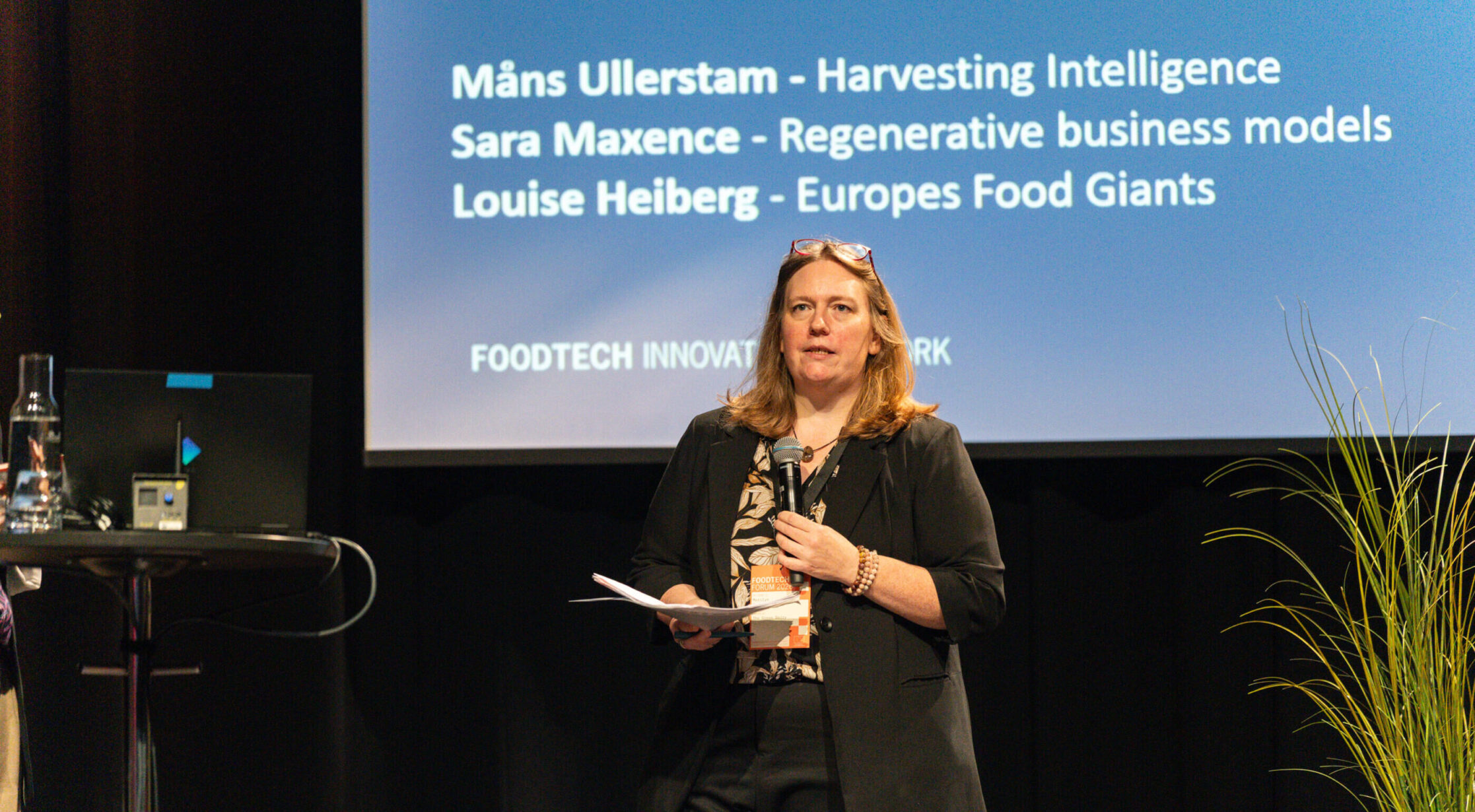
Some of the most valuable conversations at Foodtech Forum 2026 happened around the table. Through six Open Table Discussions, participants met in smaller groups to dig deeper into some of the questions shaping the future of food, from AI and circularity to scaling, investment and new business models. One conversation explored what it actually takes to move food innovation from promising prototype to commercial scale. Here are some of the key insights from the discussion, led by Marilyn Rayner, PhD, Technical Innovation Director at The Green Dairy.
Summary
The discussion focused on the practical challenges of scaling innovative food products and processes, from promising prototypes to commercially viable, market-ready solutions. Three major themes emerged: limited access to pilot and demonstration infrastructure, regulatory and financial barriers to scaling, and the need for stronger collaboration across the food value chain.
While foodtech companies are developing promising innovations, many struggle to access the facilities, funding and industrial partnerships needed to validate their technologies and prepare for commercial production. The discussion also highlighted how market structures, low margins and complex procurement processes can make it difficult for innovative products to reach customers.
A central takeaway was that scaling foodtech requires more than technological innovation. It depends on accessible infrastructure, viable routes to market and better coordination between startups, primary producers, industry, retailers and the public sector.
Access to pilot and demonstration infrastructure
A key challenge for foodtech startups is the lack of accessible, flexible infrastructure for testing and scaling innovative products and processes.
Companies often need pilot-scale production facilities to validate their technology, demonstrate commercial potential and attract investment. However, these facilities can be difficult to find, expensive to use or unsuitable for the specific requirements of different products.
The same raw material may require very different processing methods depending on the intended application and market. This creates a need for specialised equipment and flexible facilities that can accommodate different technologies and production requirements.
The discussion also highlighted the challenges of operating pilot facilities within universities, where practical activities may depend on students and where staffing, time and resources are limited.
Existing initiatives and infrastructure, including Biotech Heights, BioCommons, EU pilot initiatives and DTI, were mentioned as potential contributors to bridging the gap between laboratory research and industrial production.
The discussion raised an important question: is the main barrier the lack of available facilities, or the cost of accessing them?
Both availability and affordability appear to be important factors.
Financing and regulatory barriers to scaling
Foodtech companies face particular difficulties when trying to secure the investment needed for industrial scale-up.
Food production often operates with relatively low margins, limiting the capital available for experimentation, infrastructure and commercial expansion. At the same time, foodtech is not always perceived as a high-technology sector, which can make it harder to attract investment in specialised test and demonstration facilities.
Regulatory requirements add another layer of complexity. Requirements differ across product categories, meaning that a technology or ingredient intended for food applications may face different hurdles from one intended for other industries, such as cosmetics.
The discussion illustrated how regulatory complexity and production costs can influence which markets a company chooses to enter and how quickly it can scale.
There is therefore a need for financing mechanisms, regulatory guidance and shared infrastructure that reflect the specific characteristics of food innovation.
Building more resilient raw material supply chains
The discussion explored how innovation can help create more resilient supply chains, particularly when raw material availability, costs and demand are difficult to predict.
Participants identified weaknesses in existing data systems and highlighted the difficulties companies face when trying to forecast future raw material requirements and coordinate investments across the value chain.
For example, a beverage producer may struggle to determine future demand for a particular ingredient, making it difficult to ensure that suppliers have the capacity and resources to meet future needs.
One proposed approach was to direct investment towards the relevant parts of the value chain, including primary producers. Fairtrade was mentioned as a potential framework for supporting more structured relationships and responsible sourcing.
The discussion emphasised that producers and primary producers need to engage more closely to identify real challenges, define the questions that innovation should address and develop solutions that respond to actual industry needs.
Finding the right route to market
Access to retail remains a significant challenge for innovative food companies.
Participants described a highly concentrated retail market in which established structures do not always make it easy for new products and smaller companies to gain visibility or secure distribution.
One startup from Denmark recommended that early-stage food companies consider foodservice as an initial route to market rather than focusing exclusively on retail and direct-to-consumer sales.
Foodservice can offer an alternative way to test products, build customer relationships and demonstrate demand before pursuing wider retail distribution.
Public procurement was also discussed as a potential route to market. Public-sector organisations can provide a more clearly defined customer need through their procurement requirements. However, these same requirements can also create barriers or delay the introduction of innovative solutions.
The discussion raised the question of whether startups need clearer guidance on alternative routes to market and how to navigate different customer segments.
Examples of opportunities
- 7-Eleven in Denmark: A dedicated area for promoting new products from smaller companies was mentioned as an example of how retailers can create visibility for emerging brands.
- Pressbyrån in Sweden: A similar concept could provide a potential channel for testing and showcasing innovative food products.
- Foodservice: Restaurants, catering businesses and other foodservice operators may offer startups a more accessible entry point than large retail chains.
- Public procurement: Public-sector buyers could help create early demand for innovative products when procurement processes and requirements are designed to accommodate new solutions.
Stronger collaboration across the food value chain
A recurring theme was the need for better coordination between the different actors involved in food innovation.
Startups cannot solve every scale-up challenge independently. They need access to primary producers, ingredient suppliers, manufacturers, processing facilities, retailers, investors and public-sector organisations.
Closer collaboration can help companies identify relevant problems earlier, validate their technologies in realistic production environments and ensure that innovations address genuine market needs.
The discussion also highlighted the role of intermediaries and collaborative initiatives in connecting companies with the right infrastructure and expertise.
BioCommons was identified as one initiative that could help connect businesses with relevant test and demonstration facilities and make the pathway from pilot production to market clearer.
Key takeaways
The discussion highlighted six priorities for scaling innovative food products and processes:
- Improve access to pilot infrastructure: Develop flexible, affordable facilities that allow startups to test and validate technologies before committing to industrial production.
- Adapt financing to foodtech: Recognise the capital requirements, long development timelines and relatively low margins that can characterise food innovation.
- Clarify regulatory pathways: Help companies understand the requirements associated with different product categories and target markets.
- Build resilient supply chains: Strengthen data, forecasting and collaboration between companies and primary producers.
- Develop alternative routes to market: Help startups explore foodservice, public procurement and dedicated retail initiatives alongside conventional retail channels.
- Connect the ecosystem: Strengthen collaboration between startups, researchers, infrastructure providers, established companies, retailers and public-sector actors.
Overall conclusion
The discussion highlighted that the journey from foodtech innovation to commercial scale is constrained by interconnected challenges involving infrastructure, financing, regulation, supply chains and market access.
Addressing these challenges requires a more coordinated innovation ecosystem in which companies can access appropriate facilities, validate their solutions, connect with industrial partners and identify viable routes to market.
The central message was that scaling food innovation requires the right infrastructure and investment, but equally strong connections across the value chain. Initiatives such as BioCommons can help bridge existing gaps by connecting companies with test and demonstration facilities and making the path from prototype to commercial production more accessible.